Why is everyone moving to Utah? Ask ten new neighbors in Layton or Ogden and you will hear the same three answers: good jobs, mountains twenty minutes away, and a paycheck that actually covers a house.
Key Takeaways
- Jobs, outdoor access, and family life drive most moves to Northern Utah, not one single factor.
- Ogden's 2024 median home value was $355,600, per U.S. Census ACS estimates.
- Most Weber and Davis cities show home values around 4 to 5 times median household income.
- Californians usually move for space and affordability, but Utah winters and culture are real adjustments.
- Utah is not cheap anymore. It is cheaper relative to income than many places people leave.
See What's For Sale Right Now
Browse every active Northern Utah listing on a live map — updated straight from the MLS.
In this article
- Why Is Everyone Moving to Utah? The Short Answer
- Driver #1: Jobs and a Diverse Local Economy
- Driver #2: Mountains, Lakes, and Trails Minutes From Home
- Driver #3: Home Prices That Still Make Sense Against Income
- Northern Utah City-by-City: What the Census Numbers Show
- Why Move to Utah From California?
- Driver #4: Family-Friendly Towns and Community Feel
- Driver #5: Hill Air Force Base and Military Families
- What Renters See When They Arrive
- Should You Actually Move to Utah? Who It Fits and Who It Doesn't
- How to Start Your Move to Northern Utah
Why Is Everyone Moving to Utah? The Short Answer
People move to Utah for a mix of steady jobs, fast access to mountains and lakes, family-oriented communities, and housing that is more attainable relative to local incomes than in many coastal metros.
There is no single magnet. It is the combination that pulls people in. You can work a solid job, own a yard, and still be on a ski lift or a trailhead before lunch on Saturday.
In Northern Utah specifically, you add one more driver: Hill Air Force Base. It brings a steady flow of military families, civilian employees, and defense contractors into Weber County and Davis County every year.
The rest of this post breaks down each driver, shows the real Census numbers for local cities, and gives you an honest take on who Utah fits and who it does not.
Driver #1: Jobs and a Diverse Local Economy
Utah's economy is spread across defense, aerospace, tech, healthcare, logistics, and outdoor industries. That diversity gives people confidence they can find work and change jobs without leaving the state.
Along the Wasatch Front, you are not betting your career on one employer. Northern Utah leans heavily on defense and aerospace, anchored by Hill AFB and the contractors that support it. Davis County also has a growing mix of healthcare, retail, and logistics jobs.
Farther south, the tech corridor nicknamed "Silicon Slopes" pulls software and startup talent. Plenty of people live in Davis County and commute south, or work hybrid and only make the drive a few days a week.
Remote work changed the math, too. If your job travels with you, Utah lets you keep your salary while moving to a place with mountains out the back door. That one shift explains a lot of recent arrivals.
Driver #2: Mountains, Lakes, and Trails Minutes From Home
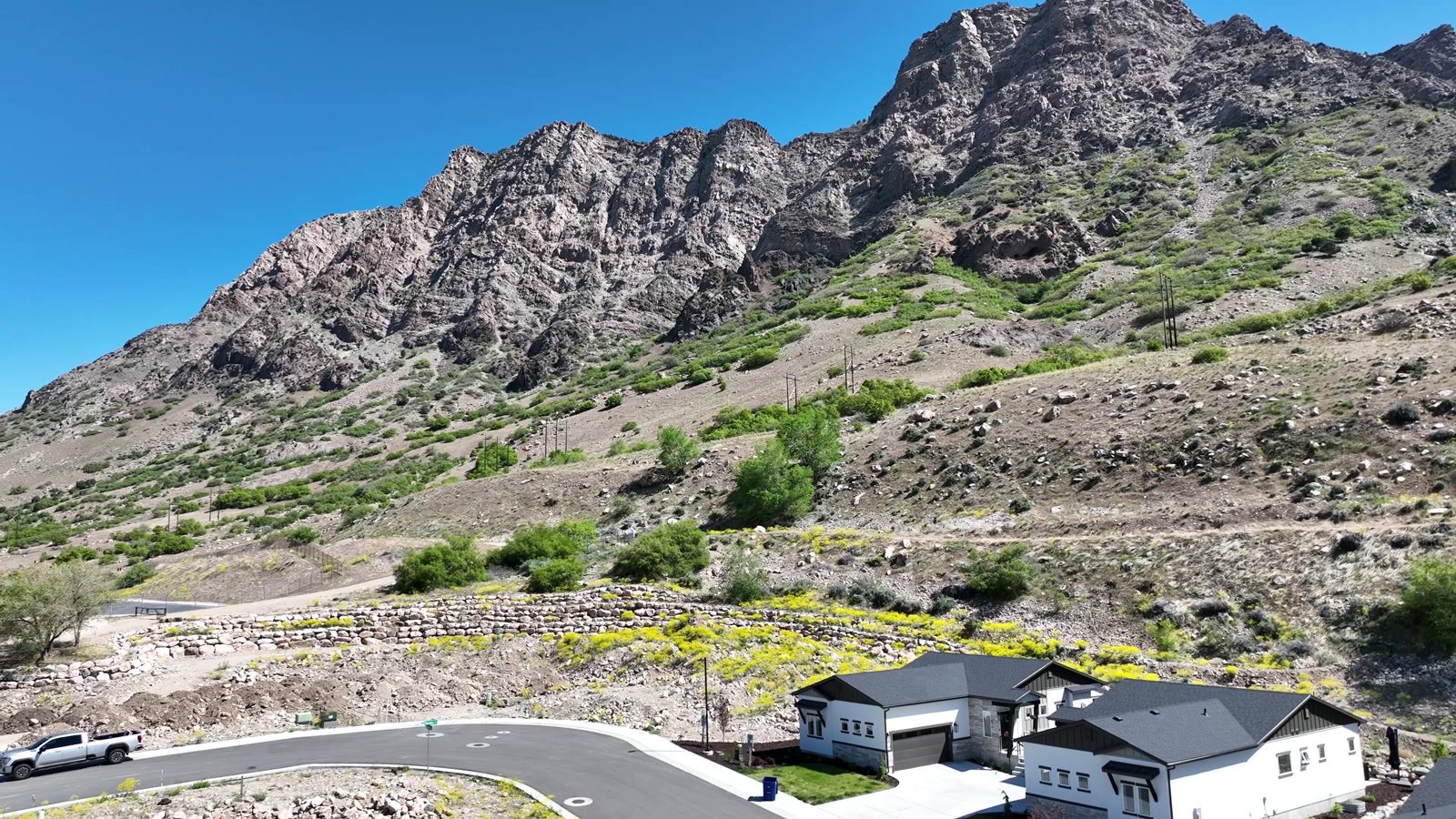
In Weber and Davis County, ski resorts, hiking trails, reservoirs, and the Great Salt Lake are a short drive from most neighborhoods. Outdoor access is part of daily life, not a vacation.
This is the reason people mention first and the one they underestimate most until they live here. From Ogden, you can reach Snowbasin, Powder Mountain, and Nordic Valley without crossing a single big city. Pineview Reservoir is a summer favorite for boating and paddleboarding.
Davis County families get the Bonneville Shoreline Trail along the foothills, plus Antelope Island State Park on the Great Salt Lake for bison, sunsets, and wide-open space.
- Winter: skiing, snowshoeing, sledding
- Summer: hiking, mountain biking, boating, camping
- Year-round: trail running, fishing, scenic drives up Ogden Canyon
The real draw is not that these places exist. It is that you can do them on a weeknight.
Driver #3: Home Prices That Still Make Sense Against Income
Utah homes are not cheap, but local incomes keep pace better than in many expensive metros. In 2024 Census data, most Weber and Davis cities show home values roughly 4 to 5 times household income.
According to the U.S. Census Bureau's American Community Survey (ACS 2024 5-Year Estimates), Ogden's median home value was $355,600 against a median household income of $72,575. That works out to about 4.9 times income.
North Ogden and Roy came in even tighter at roughly 4.2 times income. Roy's median home value was $383,000 with a median household income of $91,282. North Ogden's was $476,600 against $113,722.
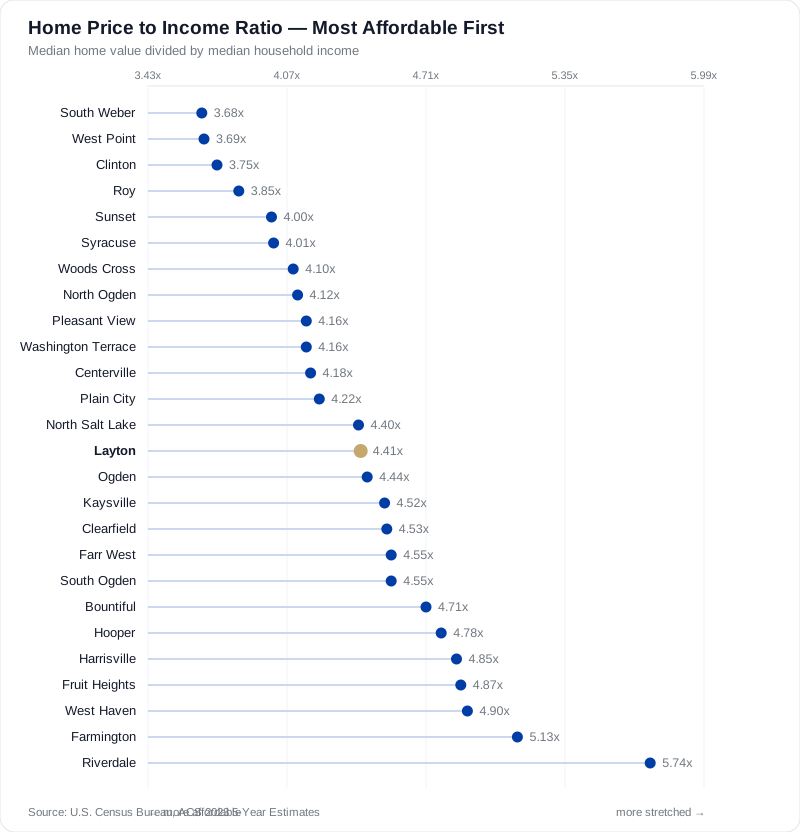
For buyers coming from markets where homes cost far more than local paychecks can carry, that gap is the whole story. It is the difference between renting forever and owning.
Northern Utah City-by-City: What the Census Numbers Show
Across eight Weber and Davis cities, 2024 median home values range from $355,600 in Ogden to $650,700 in Farmington, with median household incomes from about $72,600 to $133,000.
Here is the side-by-side, using U.S. Census Bureau ACS 2024 5-Year Estimates. The price-to-income ratio is simple math: median home value divided by median household income.
| City | Median Home Value | Median Household Income | Median Gross Rent | Value-to-Income |
|---|---|---|---|---|
| Ogden | $355,600 | $72,575 | $1,216 | 4.9x |
| Clearfield | $373,900 | $75,495 | $1,579 | 5.0x |
| Roy | $383,000 | $91,282 | $1,624 | 4.2x |
| North Ogden | $476,600 | $113,722 | $1,638 | 4.2x |
| Layton | $477,700 | $102,480 | $1,538 | 4.7x |
| Bountiful | $532,200 | $104,785 | $1,565 | 5.1x |
| Kaysville | $623,700 | $133,026 | $1,538 | 4.7x |
| Farmington | $650,700 | $127,338 | $1,769 | 5.1x |
Two things jump out. First, the higher-priced cities also have higher incomes, so the ratio stays in a fairly narrow band. Second, Weber County cities like Ogden and Roy are where your dollar goes furthest.
Keep in mind Census figures are multi-year estimates and lag the live market. For today's actual asking prices, browse current MLS listings.
Why Move to Utah From California?
Californians usually move to Utah for more home and yard for their money, a slower pace, and similar outdoor recreation. Many keep remote jobs or find comparable work in defense, healthcare, or tech.
If you are asking why move to Utah from California, the answer is usually space. Buyers who sold a modest home on the coast often find they can afford a larger house with a yard in Layton or Roy, and still have equity left over.
The outdoor lifestyle carries over well. You trade beaches for reservoirs and ski runs, but the "go outside after work" habit fits right in. Traffic on most of the Wasatch Front is lighter than what California commuters are used to, and FrontRunner commuter rail connects Ogden down through Salt Lake.
What surprises Californians most:
- Real winters. Snow on the valley floor, not just the mountains.
- Dry air. Higher elevation and low humidity take a few weeks to adjust to.
- Different pace. Many towns go quiet early, and Sundays are calm.
- Culture. Communities tend to be family-centered and church-influenced, which some love and others need time with.
Taxes come up in nearly every California conversation. Utah uses a single flat state income tax rate, and the details belong in our dedicated tax post. Check Utah.gov for current official rates.
Free PCS to Utah Relocation Guide
Get my Hill AFB relocation packet — neighborhoods, VA loan tips, schools, and timelines — sent to your inbox.
Driver #4: Family-Friendly Towns and Community Feel
Many Weber and Davis County cities are built around parks, schools, and neighborhood life. Families say they move for safe-feeling streets, youth sports, and neighbors who actually know each other.
Utah has a reputation as a place to raise kids, and Northern Utah leans into it. Cities like Kaysville, Farmington, and North Ogden have the kind of parks, splash pads, and rec leagues that make weekends easy.
Neighborhoods tend to be social. Expect people to bring cookies when you move in, wave from the driveway, and invite your kids to the street's summer barbecue. For families leaving big, anonymous metros, that is a big part of the appeal.
If you want details on a specific town, our city pages go deeper. Start with the Davis County community guide for the suburban side or the Weber County hub for more affordable options.
Driver #5: Hill Air Force Base and Military Families
Hill AFB brings a constant stream of active-duty members, civilian employees, and contractors to Northern Utah. Many PCS here, fall in love with the area, and choose to retire or separate locally.
Hill AFB sits between Weber and Davis County, which puts Roy, Clearfield, Layton, Clinton, and Riverdale within a short drive of the gates. That makes those cities especially popular with military buyers and renters.
Here is a pattern we see constantly: a family PCSes to Hill for a few years, then decides they do not want to leave. They come back after their next assignment, or they separate and take a civilian job in the defense industry right here.
If you have orders in hand, our Hill AFB PCS relocation guide covers the move step by step. VA loan details live in their own posts, so we will not repeat them here.
What Renters See When They Arrive
Median gross rents in 2024 ranged from $1,216 in Ogden to $1,769 in Farmington. For many newcomers, renting first for a few months is a smart way to learn neighborhoods before buying.
Based on the Census ACS 2024 figures, Ogden's median gross rent of $1,216 a month adds up to about $14,600 a year, roughly 20% of the city's median household income. Roy's $1,624 median rent is about 21% of its median income.
Those ratios help explain why people from high-rent cities feel relief when they land here. But rent is still a real expense, and newer units often cost more than the median.
Renting first is a good move if you do not know the area yet. You can test commutes, try a winter, and figure out whether you are a Roy person or a Bountiful person before committing.
Should You Actually Move to Utah? Who It Fits and Who It Doesn't
Utah fits people who love the outdoors, want family-oriented communities, and value space over nightlife. It is a harder fit if you need big-city culture, mild winters, coastal living, or a very low cost of entry.
Utah is a great fit if you:
- Want to ski, hike, or boat regularly, not once a year
- Are raising kids and want a neighborhood-centered life
- Work remotely, in defense, or in a field with strong local demand
- Are military and want a base area you might stay in long term
It is probably not the right move if you:
- Hate snow, cold, or short winter days
- Want late-night dining, a big arts scene, or constant nightlife
- Are sensitive to air quality. Winter inversions can trap haze in the valleys, and the Weber-Morgan Health Department posts air quality information during those stretches.
- Expect Utah to be a bargain. It is more affordable relative to income than many metros, but it is no longer cheap.
Being honest about this saves people from expensive regrets. If you are on the fence, visit in January, not just July.
How to Start Your Move to Northern Utah
Start by picking a county based on budget and commute, visit in more than one season, then talk to a local agent who can match neighborhoods to your work, schools, and lifestyle.
- Pick your side of the line. Weber County generally offers lower prices. Davis County offers more suburban polish at higher price points.
- Map your commute. Hill AFB, downtown Ogden, and Salt Lake City pull you in different directions.
- Visit in two seasons if you can. Winter tells you more than summer.
- Read up. Our free 208-page relocation guide covers neighborhoods, schools, and settling in.
- Talk to a local. Call The DIG Team at (801) 603-5213 to compare towns side by side.
The people who move here happiest are the ones who chose a town on purpose, not the first listing they saw online.
Thinking About a Move? Let's Talk.
Call Donald I. Gomez for straight answers on Northern Utah real estate — no pressure, just local help.
Frequently Asked Questions
Why is everyone moving to Utah right now?
Why do people move to Utah from California?
Is Utah still affordable?
Which Northern Utah cities are most affordable?
What are the downsides of living in Utah?
Is Northern Utah good for military families?
How do I pick between Weber County and Davis County?

Donald I. Gomez
Donald helps buyers, sellers, and PCSing military families move across Northern Utah — from Ogden to the Wasatch. A longtime Hill AFB-area local, he tours new builds and resale homes every week on his YouTube channel.