The cost of living in Farmington, UT comes down to one big line item: housing. With a $650,700 median home value, here is what you will actually pay each month, and why.
Key Takeaways
- Farmington's median home value is $650,700, among the highest in Davis County (ACS 2024).
- Property tax on the median home runs about $3,623 a year, roughly $302 a month (2025 tax year).
- Median rent is $1,769, the highest of the eight Northern Utah cities compared here.
- A non-primary home loses the 45% exemption, which nearly doubles its property tax bill.
- Kaysville offers similar homes and incomes at a slightly lower median value and tax rate.
See What's For Sale Right Now
Browse every active Northern Utah listing on a live map — updated straight from the MLS.
In this article
- Cost of Living in Farmington, UT: The Short Answer
- How Much Do Homes Cost in Farmington?
- Is Farmington Affordable for the People Who Live There?
- What Are Property Taxes in Farmington, Utah?
- What If the Home Isn't Your Primary Residence?
- How Much Does It Cost to Rent in Farmington?
- What Does a Real Monthly Budget Look Like in Farmington?
- What Costs Do New Farmington Residents Miss?
- Farmington vs. Kaysville, Layton, Centerville, and Bountiful
- Does Farmington Make Sense for Hill AFB Families?
- Who Is Farmington Right For, and Who Should Look Elsewhere?
- How to Lower Your Cost of Living in Farmington
Cost of Living in Farmington, UT: The Short Answer
Farmington is one of the pricier places to live in Northern Utah, mainly because of housing. Census data puts the median home value at $650,700 and median rent at $1,769, though median household income is also high at $127,338.
Most of what makes the cost of living in Farmington, UT different from nearby towns is the house. Groceries, gas, and car insurance don't change much between Farmington and Layton. Your mortgage or rent check does.
According to the U.S. Census Bureau's ACS 2024 5-Year Estimates, Farmington has about 25,389 residents, a median household income of $127,338, a median home value of $650,700, and a median gross rent of $1,769.
So Farmington is expensive, but the people living there also earn more than most of the region. The real question is whether those numbers line up with your income and plans. The rest of this post walks through that math line by line.
How Much Do Homes Cost in Farmington?
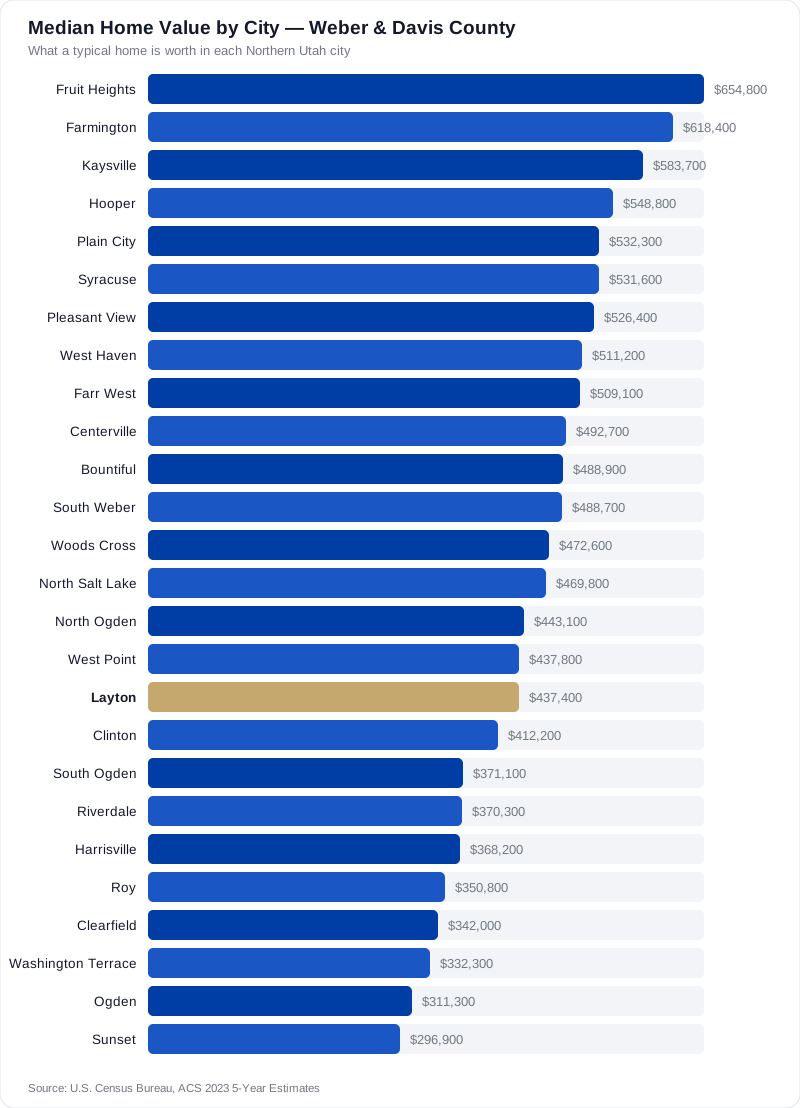
The median home value in Farmington is $650,700 (ACS 2024). That is higher than Kaysville, Bountiful, Layton, and well above Ogden, Roy, and Clearfield.
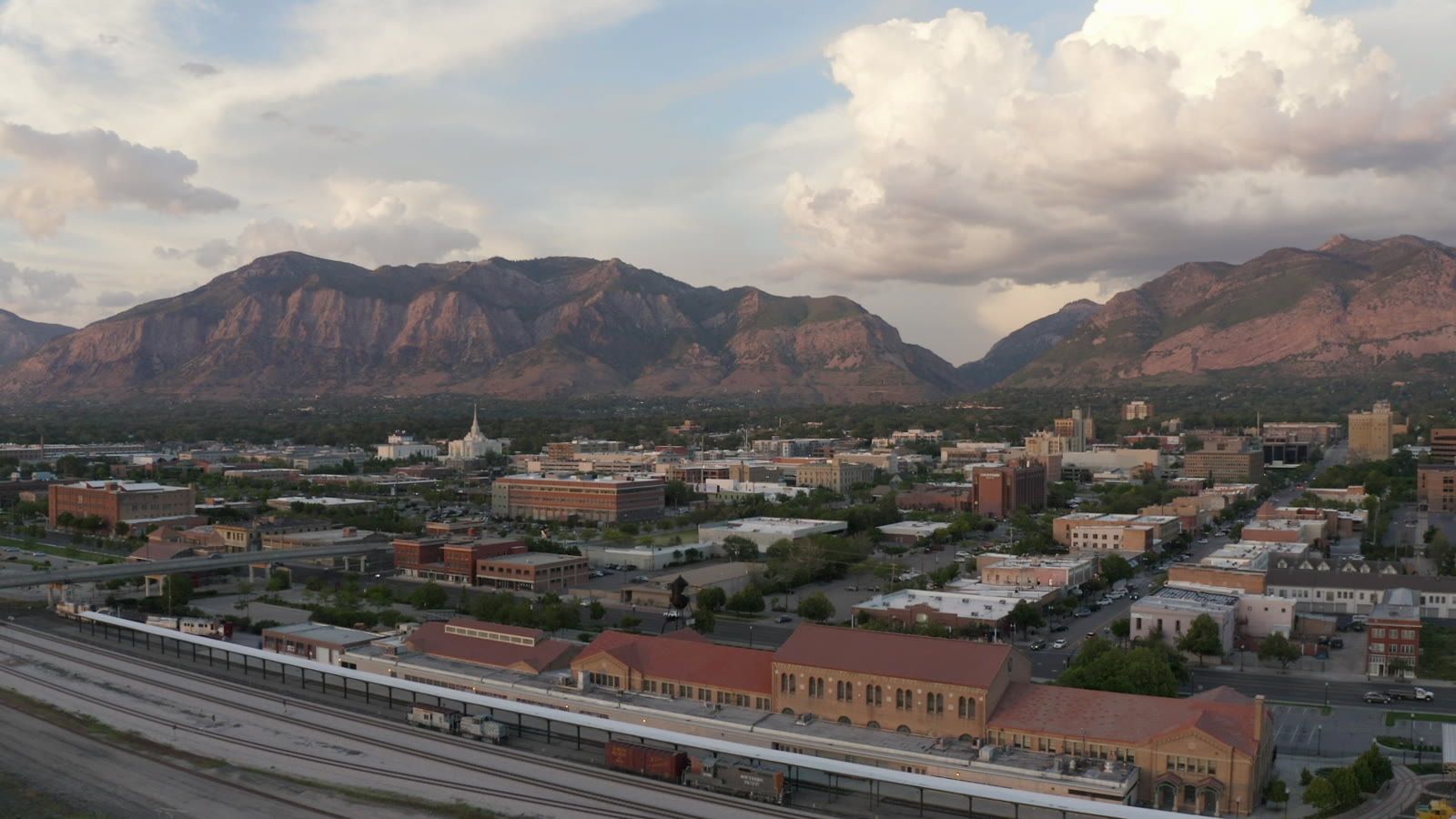
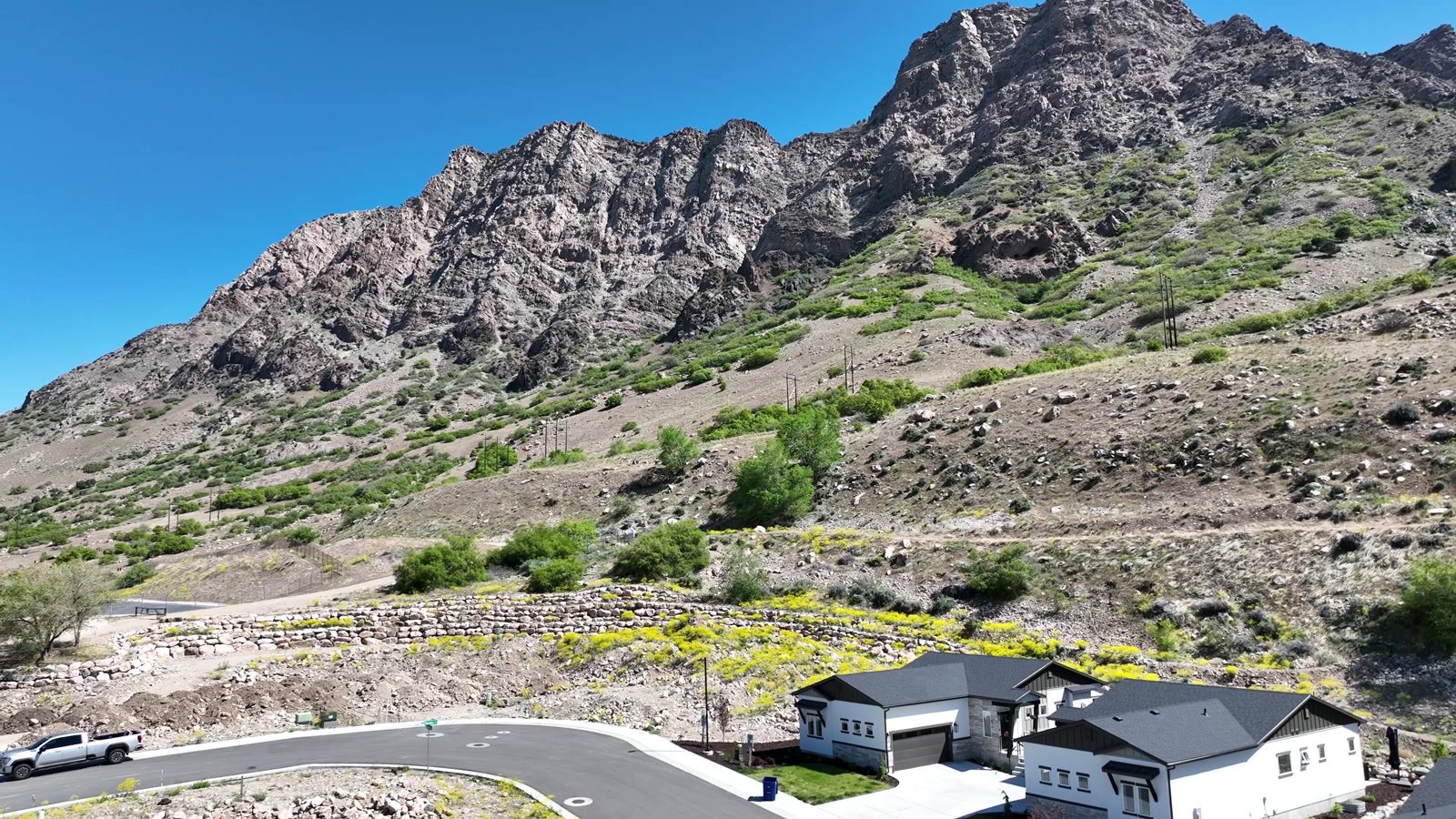
Farmington sits at the south end of Davis County, wedged between the Wasatch foothills and Farmington Bay. Land is limited, a lot of the housing is newer, and big lots on the east bench pull the median up.
Here is how Farmington compares to other Northern Utah cities, using the same Census source for every row:
| City | Median Home Value | Median Household Income | Median Gross Rent |
|---|---|---|---|
| Farmington | $650,700 | $127,338 | $1,769 |
| Kaysville | $623,700 | $133,026 | $1,538 |
| Bountiful | $532,200 | $104,785 | $1,565 |
| Layton | $477,700 | $102,480 | $1,538 |
| North Ogden | $476,600 | $113,722 | $1,638 |
| Roy | $383,000 | $91,282 | $1,624 |
| Clearfield | $373,900 | $75,495 | $1,579 |
| Ogden | $355,600 | $72,575 | $1,216 |
Keep in mind a median is the middle of everything, from older ramblers near downtown to new builds near Station Park. You'll find homes below and well above $650,700. To see what is actually for sale right now, browse live MLS listings filtered to Farmington.
Is Farmington Affordable for the People Who Live There?
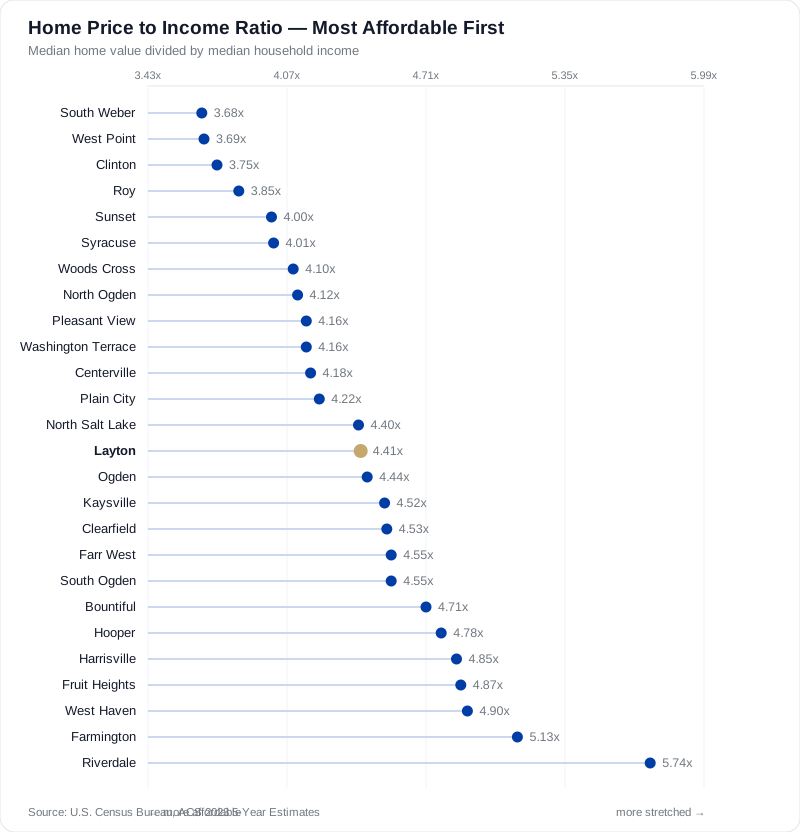
Farmington's median home value is about 5.1 times its median household income. That is the highest ratio of the eight cities compared here, so homes stretch local budgets more than in Roy or North Ogden.
A high price only matters relative to what people earn. Divide Farmington's $650,700 median home value by its $127,338 median income and you get a price-to-income ratio of about 5.1.
Compare that with the same math on the Census figures for nearby cities:
- Bountiful: about 5.1
- Clearfield: about 5.0
- Ogden: about 4.9
- Kaysville: about 4.7
- Layton: about 4.7
- Roy: about 4.2
- North Ogden: about 4.2
The takeaway: Farmington's higher incomes don't fully close the gap. Even a household earning the local median is buying at the top edge of what most lenders like to see. Kaysville, right next door, gives you a similar feel with a slightly easier ratio.
What Are Property Taxes in Farmington, Utah?
For the 2025 tax year, Farmington's typical rate is 1.0124% of taxable value. On the $650,700 median home used as a primary residence, that is about $3,623 a year, or roughly $302 a month.
According to the Utah State Tax Commission's 2025 Tax Rates by Tax Area, Farmington's most common rate for the 2025 tax year is 1.0124%. Rates are set by tax area, so they vary from 0.9830% to 1.0124% depending on where in Farmington the home sits.
That rate does not apply to the full price. The Utah State Tax Commission explains that Utah's primary residential exemption removes 45% of a primary residence's market value from taxation, so only 55% is taxed. Here is the math on the median home:
- Market value: $650,700
- Taxable value (55%): $357,885
- Times 1.0124%: about $3,623 a year
At the low end of the range (0.9830%), that same home would owe about $3,518. A handy rule of thumb for a primary residence at the typical rate: roughly $557 a year for every $100,000 of market value. For a full breakdown of how Utah property tax works, that belongs in our separate property tax guide.
What If the Home Isn't Your Primary Residence?
Without the 45% primary residential exemption, the full market value is taxed. On a $650,700 Farmington home at the typical 2025 rate, that is about $6,588 a year instead of $3,623.
This matters a lot for military families who buy, PCS out, and keep the house as a rental. It also matters if you're buying a second home or an investment property.
The Utah State Tax Commission limits the exemption to primary residences, allows only one exemption per household, and excludes transient residential use and condos in rental pools. Taxed at full value, the median Farmington home at 1.0124% owes about $6,588 a year, around $549 a month.
A few edge cases worth knowing:
- Moving in mid-year: a property that becomes your primary residence partway through the year still qualifies if you live in it for 183 or more consecutive days that year.
- Acreage: the exemption covers the residence and up to one acre of land. Bigger east-bench lots may have land above that acre taxed at full value.
- Long-term renters: a home rented to a tenant who lives there as their primary home is treated differently from a short-term rental. Confirm your situation with the Davis County Assessor before you count on it.
If you're planning to rent the home out later, budget for the higher number from day one.
How Much Does It Cost to Rent in Farmington?
Farmington's median gross rent is $1,769 a month (ACS 2024). That is the highest of the eight Northern Utah cities compared here, but it eats up only about 17% of the city's median household income.
Census "gross rent" includes contract rent plus estimated utilities, so it's closer to your real monthly cost than an advertised rent price. Farmington's $1,769 is higher than Layton and Kaysville (both $1,538) and Ogden ($1,216).
Here's the odd part. Kaysville homes are nearly as expensive as Farmington's, yet Kaysville rent is $231 a month lower. Farmington's rental mix leans toward newer apartments and townhomes near Station Park and the FrontRunner station, which tend to rent higher.
Against income, rent looks manageable. $1,769 times 12 is $21,228, about 17% of the $127,338 median income. In Ogden, rent takes about 20% of the local median. If you're new to the area or on a short assignment, renting in Farmington first can be a smart way to learn the town before committing to its home prices.
What Does a Real Monthly Budget Look Like in Farmington?
A median Farmington household brings in about $10,612 a month before taxes. Rent averages $1,769, or a homeowner pays about $302 a month in property tax before mortgage, insurance, and utilities.
Here is what we can say with real numbers, using the Census and Tax Commission figures above:
- Gross monthly income (median): $127,338 divided by 12 = about $10,612
- Median rent: $1,769 a month
- Property tax, median home, primary residence: about $302 a month
- Property tax, same home as a rental: about $549 a month
Down payment math on the $650,700 median value:
- 5% down: $32,535
- 10% down: $65,070
- 20% down: $130,140
The biggest piece, principal and interest, depends on your rate and loan type, and those change weekly. Have a lender quote you on a specific Farmington price point. Then add homeowners insurance, any HOA dues, and utilities to get your true number. Never budget off a rate you saw in a headline.
Free PCS to Utah Relocation Guide
Get my Hill AFB relocation packet — neighborhoods, VA loan tips, schools, and timelines — sent to your inbox.
What Costs Do New Farmington Residents Miss?
The surprises are usually HOA dues in newer subdivisions and townhome communities, utility setup, land above one acre losing the tax exemption, and winter costs on bench properties.
The listing price and tax bill are easy to find. These are the line items that catch people off guard:
- HOA dues. Many newer neighborhoods and nearly all townhome communities near Station Park have them. Ask for the current dues, what they cover, and any special assessments before you write an offer.
- Utilities. Water, sewer, and garbage billing differ by provider. Ask the seller for recent bills so you're working from real numbers, not guesses.
- Big lots. Only the home and up to one acre get the primary residential exemption. More land means more taxable value.
- Winter on the bench. East-bench homes see more snow and steeper driveways. Plan for snow removal.
None of these is a deal breaker. You just want them in your budget before closing, not after.
Farmington vs. Kaysville, Layton, Centerville, and Bountiful
Farmington has the highest median home value of these five cities. Its 2025 tax rate is mid-pack, so its larger tax bill comes from higher home values, not a higher rate.
Using the Utah State Tax Commission's 2025 tax-area rates (typical rate for each city; actual rates vary by tax area) on each city's median home as a primary residence:
- Farmington: 1.0124%, about $3,623 a year
- Kaysville: 0.9625%, about $3,302 a year
- Centerville: 1.0454%, about $3,054 a year
- Bountiful: 1.0102%, about $2,957 a year
- Layton: 0.9527%, about $2,503 a year
Fruit Heights, just north, has a higher median value ($667,700 in the Tax Commission data) and a similar bill of about $3,631 at its typical 0.9887% rate.
If Farmington is a stretch, Kaysville is the closest substitute in feel. If you want the most house for the money in Davis County, Layton is the usual answer. Our Davis County community guide covers every city side by side.
Does Farmington Make Sense for Hill AFB Families?
It can, but Farmington is at the far south end of the Hill AFB commuting area. Families stationed at Hill often get more home per dollar in Layton, Clearfield, Roy, or Kaysville.
Hill Air Force Base sits between Davis and Weber counties. Farmington is farther south than most military families search, though Legacy Parkway, I-15, and US-89 all run through town.
The bigger issue is price. Farmington's $650,700 median value is well above Clearfield ($373,900) and Roy ($383,000), the two cities closest to the base. Compare your BAH against the property tax and HOA numbers above before you fall for a Farmington house. VA loan details and entitlement have their own posts on this site, so we won't repeat them here.
Farmington makes most sense for dual-income military families, or when a spouse works in Salt Lake County. For the full picture of PCSing to Hill, see our PCS relocation guide.
Who Is Farmington Right For, and Who Should Look Elsewhere?
Farmington fits higher-income households who value newer homes, FrontRunner access, and mountain trails. It's a poor fit for tight budgets, short assignments where you'll sell quickly, or buyers who want the most square footage per dollar.
Farmington is a good fit if you:
- Earn near or above the $127,338 local median, or have strong savings for a down payment
- Commute toward Salt Lake City and want FrontRunner or Legacy Parkway nearby
- Want newer construction, quick shopping at Station Park, and trailheads close to home
- Plan to stay long enough for closing costs to make sense
Farmington is probably not right if you:
- Need your housing payment to stay low; Roy, Clearfield, and Ogden cost far less
- Are on a 2-3 year assignment and plan to rent the home out after, since the tax bill nearly doubles without the exemption
- Commute daily to Hill AFB's north gates and want a short drive
- Want a large lot without paying a premium
Being honest: lots of buyers who start in Farmington end up happier in Kaysville or Layton. That's not a failure. It's the math working.
How to Lower Your Cost of Living in Farmington
File for the primary residential exemption, compare tax areas, weigh HOA dues against price, and consider renting first. Each choice can save hundreds of dollars a year.
You can't change Farmington's market, but you can control how much of it you pay:
- Make sure your exemption is in place. Confirm with the Davis County Assessor that your home is recorded as a primary residence. Missing it means roughly double the tax.
- Check the tax area. Farmington's 2025 rates run from 0.9830% to 1.0124%. On a $650,700 home, that's about a $105-a-year difference.
- Compare total payment, not price. A cheaper townhome with high HOA dues can cost more monthly than a pricier home without them.
- Rent first if you're unsure. At $1,769 median rent, a year of renting lets you learn the neighborhoods before buying.
Want the whole relocation picture in one place? Grab our free 208-page relocation guide, or read the Farmington community page for neighborhood details.
Thinking About a Move? Let's Talk.
Call Donald I. Gomez for straight answers on Northern Utah real estate — no pressure, just local help.
Frequently Asked Questions
Is Farmington, Utah expensive to live in?
How much are property taxes on a Farmington home?
What salary do I need to live comfortably in Farmington?
Is Farmington cheaper than Kaysville?
Will my property taxes go up if I PCS and rent out my Farmington home?
Is it better to rent or buy in Farmington?
Where can I see homes for sale in Farmington right now?

Donald I. Gomez
Donald helps buyers, sellers, and PCSing military families move across Northern Utah — from Ogden to the Wasatch. A longtime Hill AFB-area local, he tours new builds and resale homes every week on his YouTube channel.