
The cost of living in Roy Utah — and across Weber and Davis County — comes down to four lines: housing, property tax, utilities, and everything else. Here's what those actually cost, with real numbers.
Key Takeaways
- Roy's median home value is $350,800 with a median household income of $91,112 (Census ACS 2023).
- Utah exempts 45% of a primary home's value from property tax — only 55% is taxable.
- Roy's 2025 property tax runs about $1,989/year on the median home. Ogden's is roughly $2,123.
- Housing is the swing factor: Ogden's median value is $311,300, Farmington's is $618,400.
- Median gross rent in Ogden is $1,128; in Roy it's $1,557 (Census ACS 2023).
See What's For Sale Right Now
Browse every active Northern Utah listing on a live map — updated straight from the MLS.
In this article
- Cost of Living in Roy Utah: The Baseline Numbers
- Housing: The Line That Changes Everything
- Property Taxes: Utah's 45% Exemption Changes the Math
- What Property Tax Costs by City for the 2025 Tax Year
- What Renting Costs in Weber and Davis County
- Utilities, Water, and Getting Around
- How Much Do You Need to Live Comfortably in Utah?
- What Is the Cheapest City to Live In Around Here?
- Is It Cheaper to Live in Utah Than California?
- Budgeting Around Hill Air Force Base
- Who Northern Utah Is Right For — and Who It Isn't
- How to Build Your Own Northern Utah Monthly Budget
Cost of Living in Roy Utah: The Baseline Numbers
Roy's median home value is $350,800 and median household income is $91,112 (Census ACS 2023). Median gross rent is $1,557. The 2025 property tax on a median Roy home runs about $1,989 per year.
People move here expecting every line item to change. Most don't. A gallon of milk costs about the same in Ogden as it does in Kaysville, and your car insurance doesn't care which side of the county line you park on.
What changes dramatically is housing. So when someone asks "what is the cost of living like in Utah," the honest answer is: it depends which town you're standing in.
I use Roy as the baseline because it's the honest middle of Northern Utah. It sits minutes from Hill Air Force Base, has a population of 39,021, and its home values land squarely between Ogden's and Layton's. Here's what the U.S. Census Bureau reports for Roy (ACS 2023 5-Year Estimates):
- Median home value: $350,800
- Median household income: $91,112
- Median gross rent: $1,557
That relationship matters. A $350,800 home against a $91,112 median income is a ratio under 4x — in a lot of the country, and certainly in coastal California, that ratio is double.
On taxes, the Utah State Tax Commission's 2025 Tax Rates by Tax Area puts Roy's typical rate at 1.0307% for the 2025 tax year. Applied to the median Roy home after the residential exemption, that's roughly $1,989 a year, or about $166 a month. Rates vary by tax area within Roy (roughly 0.9987% to 1.0527%), so your exact parcel may differ.
You can see what's actually for sale at those numbers on our live MLS listing search.
Housing: The Line That Changes Everything
Median home values across Weber and Davis County range from $311,300 in Ogden to $618,400 in Farmington (Census ACS 2023). That single line determines whether your budget feels tight or comfortable.
Housing takes the largest bite of a typical Northern Utah budget. Choose well and everything else gets easier.
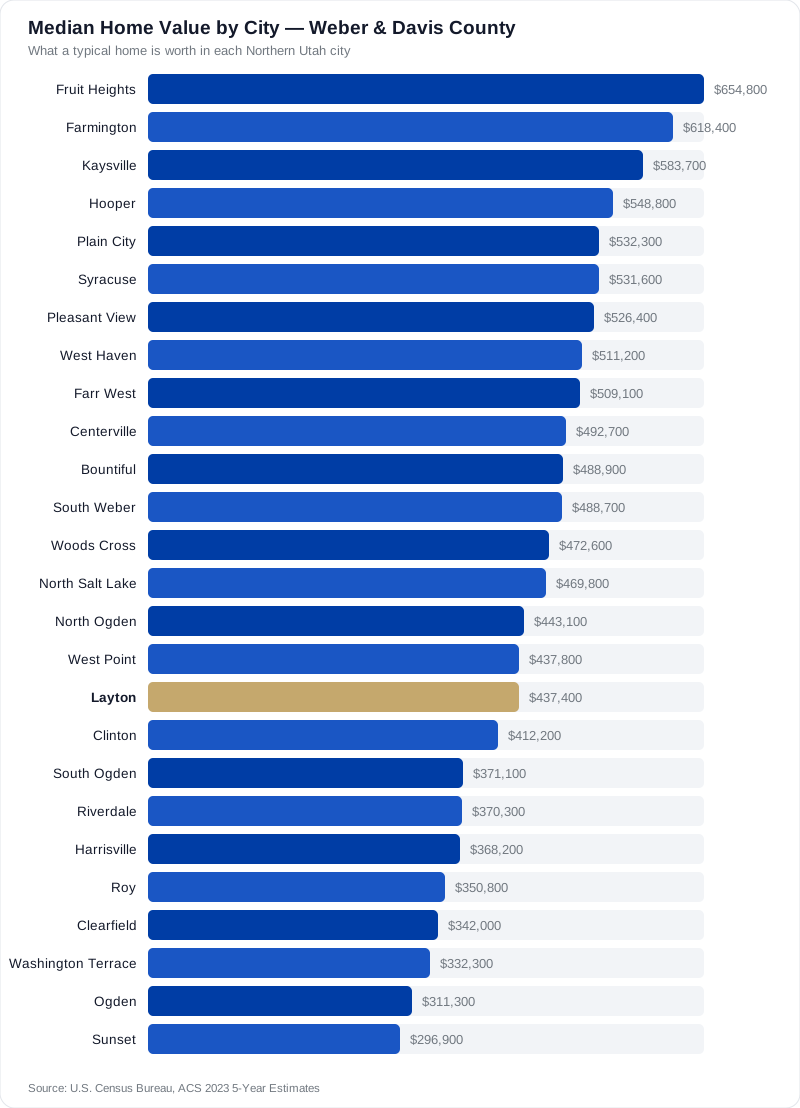
Here's how the Census median values line up (ACS 2023 5-Year Estimates):
- Ogden: $311,300
- Clearfield: $342,000
- Roy: $350,800
- Layton: $437,400
- North Ogden: $443,100
- Bountiful: $488,900
- Kaysville: $583,700
- Farmington: $618,400
The gap between Clearfield and Kaysville is about $240,000. On a 30-year mortgage that's a serious monthly difference — more than most families save by cutting every discretionary line they have.
One caution on these figures: median value is not the same as a list price today. Census values are owner-reported estimates from a five-year survey window, so they run behind the live market. Use them to compare cities to each other, not to price a specific house.
Property Taxes: Utah's 45% Exemption Changes the Math
Utah exempts 45% of a primary residence's fair market value from property tax, so only 55% is taxable. That's why a $437,400 Layton home pays roughly $2,292 for the 2025 tax year, not double that.
This is the most misunderstood line in a Northern Utah budget, and it works in your favor.
According to the Utah State Tax Commission, the primary residential exemption removes 45% of your home's fair market value from taxation. Only 55% is taxable. The exemption covers the residence plus up to one acre of land, with authority from Utah Code 59-2-102 and 59-2-103 and Article XIII, Section 3 of the Utah Constitution.
Rules worth knowing:
- A property that becomes residential partway through the year still qualifies if it was used as a primary residence for 183 or more consecutive calendar days that year.
- Transient residential use and condominiums held in a rental pool are excluded.
- Only one exemption may be claimed per household. If you keep a rental in another Utah city, that second property doesn't get it.
So when you run your own numbers, don't multiply the purchase price by the tax rate. Multiply 55% of the price by the rate. That one mistake makes people budget nearly twice what they'll actually owe.
What Property Tax Costs by City for the 2025 Tax Year
For the 2025 tax year, Roy's median home pays about $1,989 and Ogden's about $2,123, while Farmington's median home pays roughly $3,443. Rates are set per tax area, so figures shown are typical for each city.
All rates below come from the Utah State Tax Commission's 2025 Tax Rates by Tax Area, applied to 55% of each city's median home value after the residential exemption. Rates vary by tax area within a city — one town can contain several slightly different rates — so treat each figure as typical, not universal.
| City | Median home value | Typical 2025 rate | Est. annual tax | Per month |
|---|---|---|---|---|
| Sunset (Davis) | $296,900 | 1.0963% | $1,790 | ~$149 |
| Washington Terrace (Weber) | $332,300 | 1.0532% | $1,925 | ~$160 |
| Roy (Weber) | $350,800 | 1.0307% | $1,989 | ~$166 |
| Riverdale (Weber) | $370,300 | 1.0279% | $2,093 | ~$174 |
| Clearfield (Davis) | $342,000 | 1.1159% | $2,099 | ~$175 |
| Ogden (Weber) | $311,300 | 1.2402% | $2,123 | ~$177 |
| Layton (Davis) | $437,400 | 0.9527% | $2,292 | ~$191 |
| Bountiful (Davis) | $488,900 | 1.0102% | $2,716 | ~$226 |
| North Ogden (Weber) | $443,100 | 1.1302% | $2,754 | ~$230 |
| Kaysville (Davis) | $583,700 | 0.9625% | $3,090 | ~$258 |
| Farmington (Davis) | $618,400 | 1.0124% | $3,443 | ~$287 |
Two things jump out. First, Ogden carries the highest rate on this list at 1.2402% for the 2025 tax year — but because its median home value is the lowest, the actual bill still lands near Roy's. Rate and value have to be read together.
Second, Layton and Kaysville have some of the lowest rates in the region (0.9527% and 0.9625% typical for 2025), which softens their higher home prices a little. Not enough to erase them, but enough to matter when you're comparing two offers.
Other Weber County towns land in the same range: Harrisville's typical 2025 rate is 1.1677% (about $2,365 on its $368,200 median home), Pleasant View is 1.0910% (about $3,159), and Plain City is the lowest at 0.8746% (about $2,561 on a $532,300 median home).
What Renting Costs in Weber and Davis County
Median gross rent runs $1,128 in Ogden, $1,405 in North Ogden, $1,455 in Layton, $1,459 in Clearfield, and $1,557 in Roy (Census ACS 2023). Gross rent includes tenant-paid utilities.
Rent is the other half of the housing question, and Northern Utah's numbers surprise people who assume renting is always the cheaper path.
Census ACS 2023 median gross rent by city:
- Ogden: $1,128
- North Ogden: $1,405
- Kaysville: $1,423
- Layton: $1,455
- Clearfield: $1,459
- Bountiful: $1,467
- Roy: $1,557
- Farmington: $1,644
Notice that Roy rents higher than Kaysville and Bountiful even though Roy homes cost far less to buy. That's a supply story — Roy has a thinner rental pool and steady demand from Hill AFB families on short assignments.
"Gross rent" in Census terms means contract rent plus the utilities and fuels the tenant pays. So these figures already fold in part of your utility line, which makes them a fairer comparison to a mortgage payment than a bare rent number would be.
Utilities, Water, and Getting Around
Utility costs swing hardest with winter heating and summer irrigation. Rates are set by your provider and city, not the county, so pull the actual fee schedule for your address before you budget a number.
I'm not going to hand you an invented average power bill. Rates change, providers differ by city, and usage depends on the house.
What I can tell you from working these neighborhoods:
- Natural gas heating is the norm across Weber and Davis County, and January is the month that hurts. Budget for a winter peak, not a flat monthly figure.
- Water and secondary (irrigation) water are billed separately in many cities. Towns like Plain City, West Point, and Hooper have pressurized secondary systems that keep summer lawn watering far cheaper than culinary water would be. Ask about it before you buy on a big lot.
- Garbage, recycling, and storm drain fees ride along on the city utility bill. Every city publishes its current schedule on its own website.
On transportation, nearly everyone here drives. FrontRunner commuter rail runs the I-15 corridor with stops in Ogden, Roy, Clearfield, Layton, and Farmington, and it's a real option if you work in Salt Lake. Check current fares with UTA or through Utah's official state portal rather than trusting an old figure.
One local cost newcomers miss: good winter tires are not optional if you live on the benches in North Ogden, Pleasant View, or Fruit Heights. Those hills get slick, and they get plowed after the main roads do.
How Much Do You Need to Live Comfortably in Utah?
Northern Utah median household incomes range from $70,053 in Ogden to $128,996 in Kaysville (Census ACS 2023). Half the households in each city live on that or less, which is the most honest benchmark available.
"Comfortable" is subjective, so use the local median income as your reality check. If half the households in a city manage on that figure, it's a workable number for a similar household.
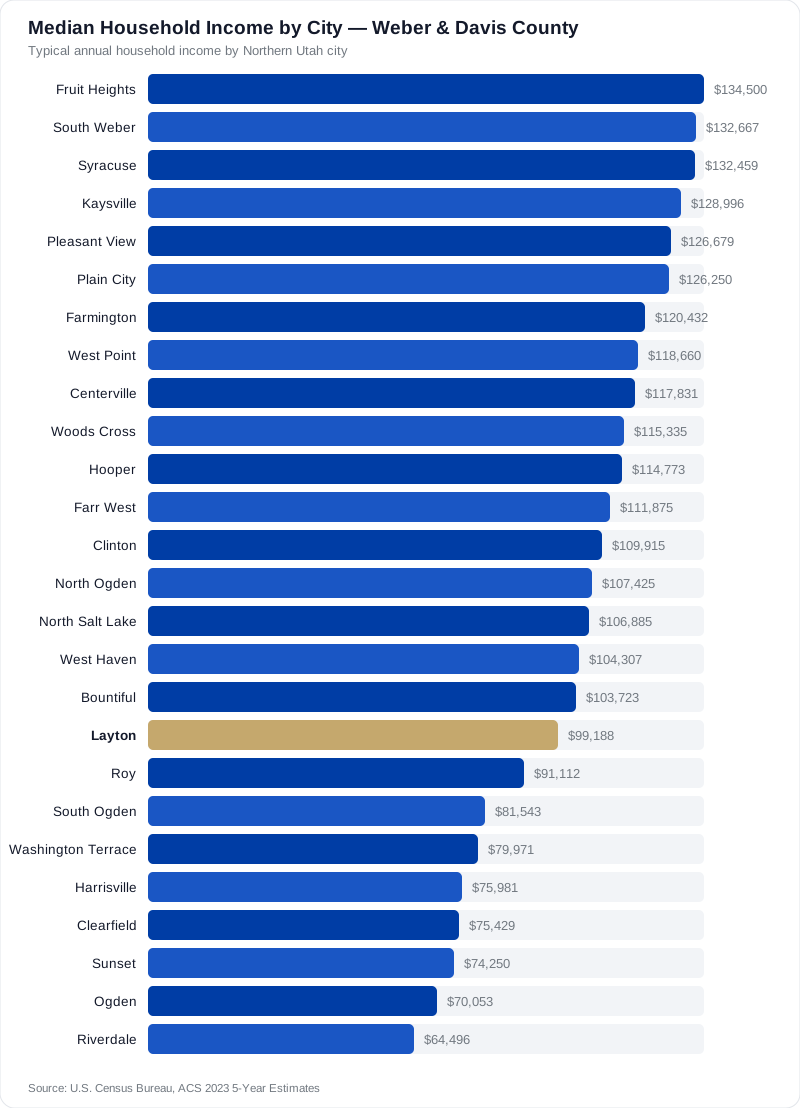
Census ACS 2023 median household income:
- Ogden: $70,053
- Clearfield: $75,429
- Roy: $91,112
- Layton: $99,188
- Bountiful: $103,723
- North Ogden: $107,425
- Farmington: $120,432
- Kaysville: $128,996
Here's the useful way to read that list: each city's income roughly tracks its home prices. Kaysville's median income is about 84% higher than Ogden's, and its median home value is about 88% higher. These towns aren't wildly out of balance with each other — they're sorted by what the people living there earn.
The practical rule I give clients: if your household income sits well below the median for a city, you're not priced out, but you'll be shopping the entry end of that market and competing for a smaller pool of homes. That's fine. Just go in knowing it, and don't stretch to the top of your pre-approval in a town where you'd be the lowest-income household on the block.
Free PCS to Utah Relocation Guide
Get my Hill AFB relocation packet — neighborhoods, VA loan tips, schools, and timelines — sent to your inbox.
What Is the Cheapest City to Live In Around Here?
By median home value, Ogden ($311,300) is least expensive, followed by Clearfield ($342,000) and Roy ($350,800). By property tax bill, Sunset's median home pays the least at roughly $1,790 for the 2025 tax year.
"Cheapest" splits into two answers depending on whether you mean purchase price or ongoing cost.
Lowest median home values in this group (Census ACS 2023): Ogden at $311,300, Clearfield at $342,000, and Roy at $350,800.
Lowest annual property tax bills for the 2025 tax year, using the Utah State Tax Commission's published rates applied to median values: Sunset at about $1,790, Washington Terrace at about $1,925, and Roy at about $1,989.
Smaller Weber County towns also land in the affordable tier while sitting minutes from Hill AFB — Harrisville (median $368,200, roughly $2,365 in 2025 tax) and Riverdale (median $370,300, roughly $2,093) both qualify.
My honest take: Ogden gives you the most house for the money in this region, and neighborhood character varies block by block there more than anywhere else in Weber County. That's an advantage if you know the streets and a real risk if you don't. Browse what's active in each city on our MLS search, or start with the Weber County community guide.
Is It Cheaper to Live in Utah Than California?
On housing, yes — substantially. Median home values in Weber and Davis County run from $311,300 to $618,400 (Census ACS 2023), well below most California metro medians. Everyday costs like groceries and fuel are much closer.
This is the question I get most from families arriving from the West Coast, and the honest answer is that housing carries almost all of the difference.
Rather than quote a California figure I can't verify for your specific city, do this: pull up your current city and a Northern Utah city on the U.S. Census Bureau site and compare median home value and median gross rent side by side. That's the same source behind every Census number in this post, so you're comparing apples to apples.
What I'd point out from the Utah side:
- The 45% primary residential exemption means your taxable value is barely more than half your purchase price. Check how your current state assesses before you assume the tax lines are comparable.
- Total 2025 property tax bills on median homes here run roughly $1,790 to $3,443 depending on the city, per the Utah State Tax Commission.
- Local incomes are solid. Layton's median household income is $99,188 and Kaysville's is $128,996 (Census ACS 2023), so you're not trading a lower cost of living for a much lower earning ceiling.
What surprises people going the other direction: groceries, gas, and eating out are not dramatically cheaper here. The savings show up in your mortgage payment, not your Costco run. Plan your budget around that, and you won't be caught off guard in month three.
Budgeting Around Hill Air Force Base
Hill AFB families should anchor the budget to their actual BAH rate, which the Defense Department publishes by rank, dependency status, and ZIP code each year. Then compare it to real costs in Roy, Clearfield, Layton, and Sunset.
If you're stationed at Hill Air Force Base, your housing allowance anchors the whole budget — and it's the one number I won't estimate for you, because BAH varies by rank, dependency status, and ZIP code and is reset annually. Pull your exact rate from the official DoD BAH calculator first.
Once you have it, the comparison gets simple. The cities closest to the base — Roy, Clearfield, Sunset, Layton, and South Weber — also sit in the more affordable half of this region. That's unusual, and it works in your favor.
Three budget notes specific to military families here:
- Roy and Clearfield rent above their purchase-price tier ($1,557 and $1,459 median gross rent, Census ACS 2023). If your assignment runs three-plus years, run the buy math seriously.
- VA financing has its own rules on entitlement, funding fees, and occupancy — a full topic of its own. Start at the VA home loans page.
- Utah Housing Corporation runs its own programs; details are at utahhousingcorp.org.
Our PCS relocation guide for Hill AFB covers timing your move, and the free 208-page relocation guide goes deeper on neighborhoods and schools.
Who Northern Utah Is Right For — and Who It Isn't
Northern Utah works well for households earning near the local median who want space and a short commute. It's a poor fit if you need urban density, mild winters, or a car-free lifestyle.
I'd rather you figure this out from a blog post than after you've signed.
It's a strong fit if:
- You work at or near Hill AFB, or anywhere in the Ogden–Clearfield–Layton corridor. Short commutes here are genuinely short.
- Your household income is near the local median for the city you're targeting.
- You want a yard, a garage, and mountains close by, and you're fine driving for errands.
- You're coming from a higher-cost housing market and the mortgage math is the whole point.
It's probably not a fit if:
- You want to be car-free. FrontRunner helps along I-15, but daily life off that corridor assumes a vehicle. Budget for two if you have two working adults.
- You hate winter. Snow, ice, and inversion season are real, and the bench neighborhoods get more of all three.
- You need big-city density. Ogden has a genuine downtown, but if you're expecting Denver or Seattle nightlife you'll be disappointed.
- You're buying purely as a short-term investment. The tax structure rewards primary residents — investment property doesn't get the 45% residential exemption.
- Your budget only works if nothing breaks. Older Ogden and Clearfield housing stock can carry deferred maintenance. Leave room for a furnace or a roof.
If you're on the fence, call me at (801) 603-5213 and we'll run your actual numbers against a specific city instead of a national average.
How to Build Your Own Northern Utah Monthly Budget
Start with a target city, take 55% of your actual purchase price, multiply by that city's 2025 tax rate, then add insurance, HOA, utilities, and your own fixed costs. Verify every rate at its official source.
Here's the order I walk clients through:
- Pick two or three target cities using the median home values above so you know which tier you're shopping.
- Get pre-approved so you have a real purchase price. Your lender supplies the principal-and-interest figure — I won't quote rates here because they move daily.
- Calculate property tax correctly. Take 55% of the purchase price after the residential exemption, multiply by the city's rate from the Utah State Tax Commission's 2025 rate publication, then divide by 12. Confirm your specific tax area with the county — Weber and Davis County each publish parcel-level detail.
- Get a real homeowners insurance quote for the actual address. Premiums vary by home age and construction.
- Add HOA if applicable. Newer subdivisions in West Haven, Syracuse, and West Point often have one.
- Add utilities from the city's published fee schedule plus a heating estimate drawn from the seller's actual bills — ask for them during your inspection period.
- Add your own life: vehicles, childcare, food, and savings.
For local county services and health resources, Weber-Morgan Health Department is a solid reference on the Weber County side.
Ready to put numbers to a real address? Browse the Davis County communities or search current listings, and I'll help you price out the monthly.
Thinking About a Move? Let's Talk.
Call Donald I. Gomez for straight answers on Northern Utah real estate — no pressure, just local help.
Frequently Asked Questions
Is the cost of living in Utah high?
How much do you need to live comfortably in Roy, Utah?
Why is Ogden's property tax rate higher than Layton's?
Does the 45% property tax exemption apply to a rental property?
What is the cheapest city to live in in Northern Utah?
Is it cheaper to live in Utah than California?
Do I need two cars in Weber or Davis County?
How do I find the exact property tax on a specific house?

Donald I. Gomez
Donald helps buyers, sellers, and PCSing military families move across Northern Utah — from Ogden to the Wasatch. A longtime Hill AFB-area local, he tours new builds and resale homes every week on his YouTube channel.


