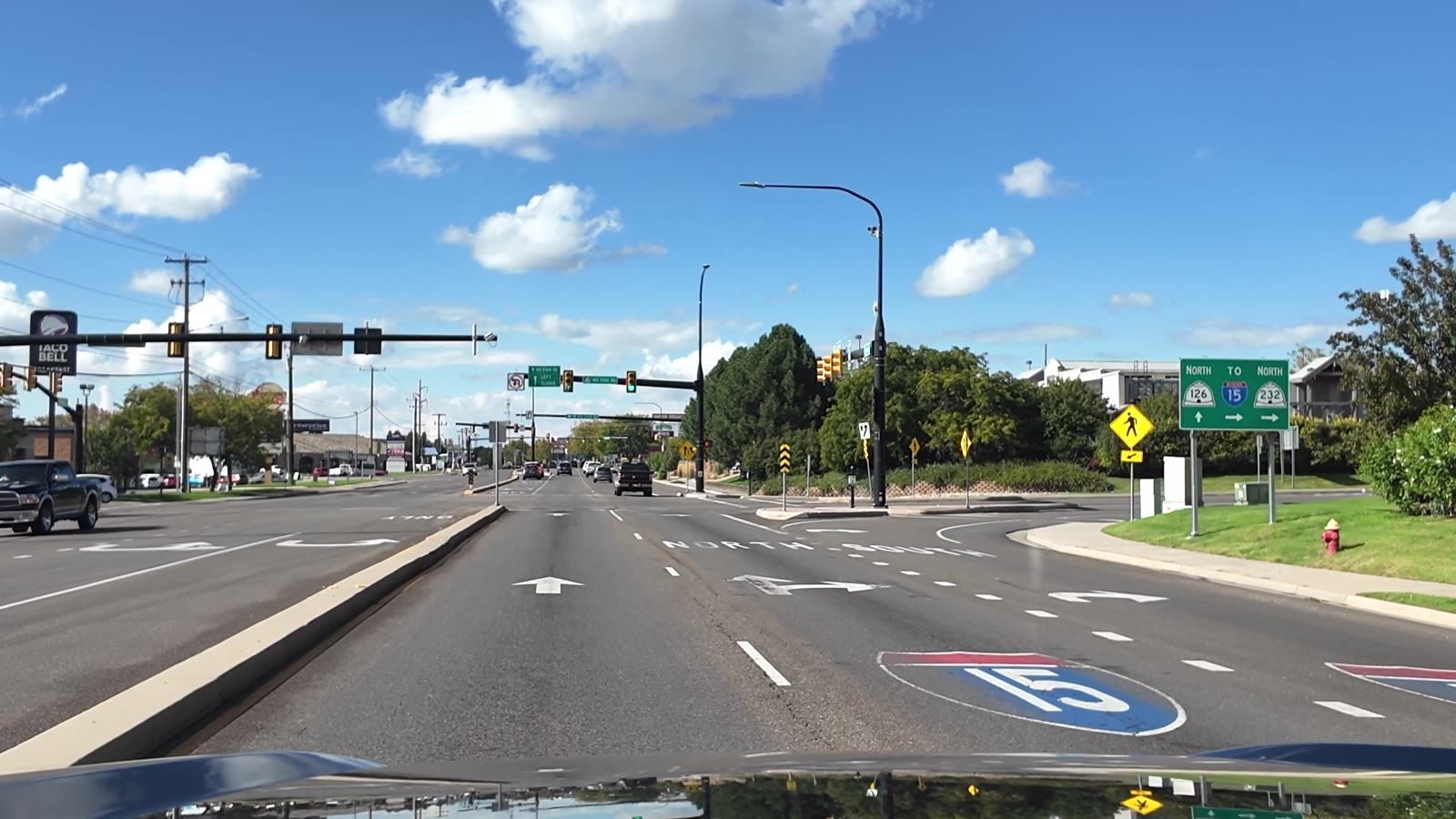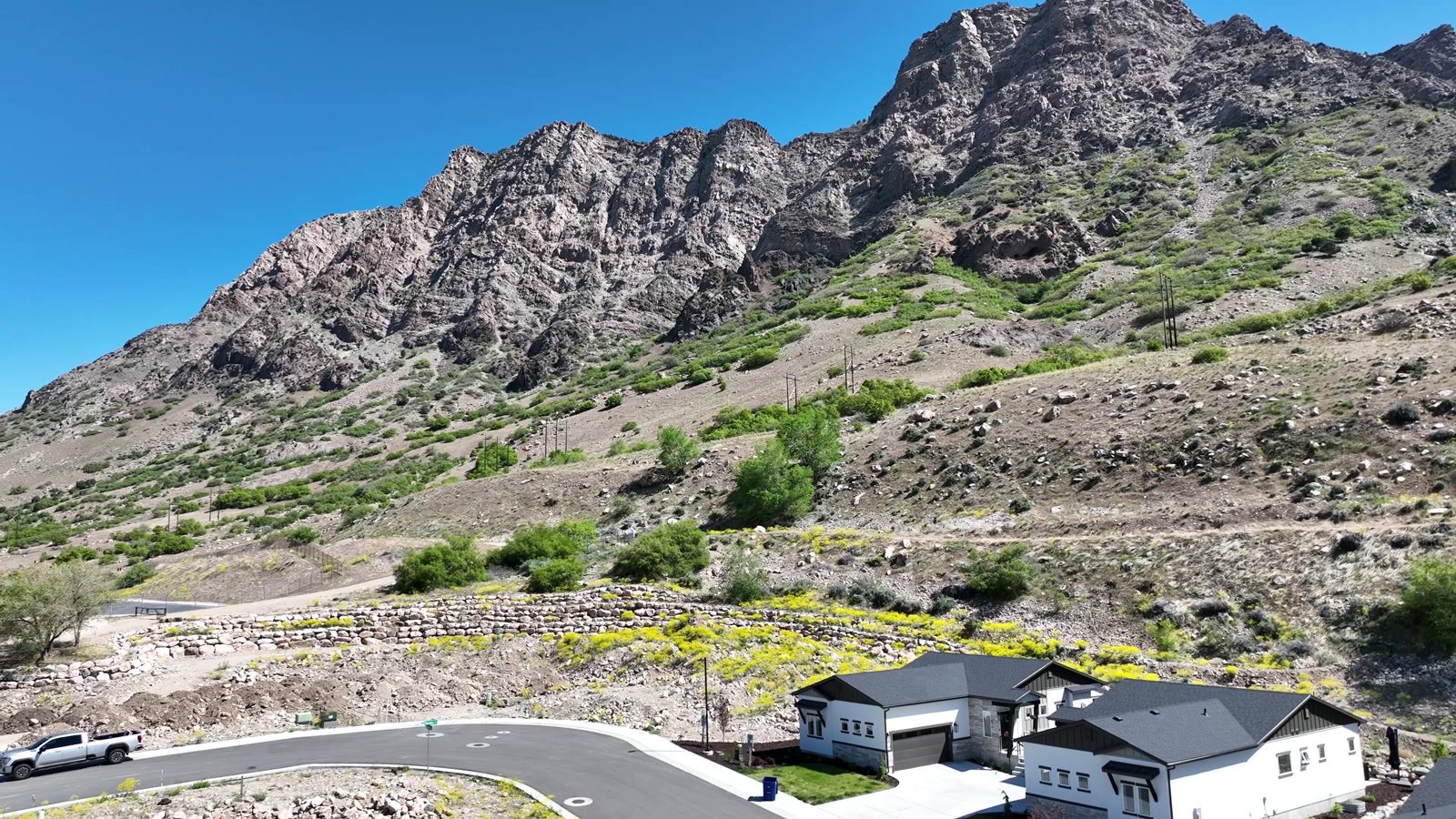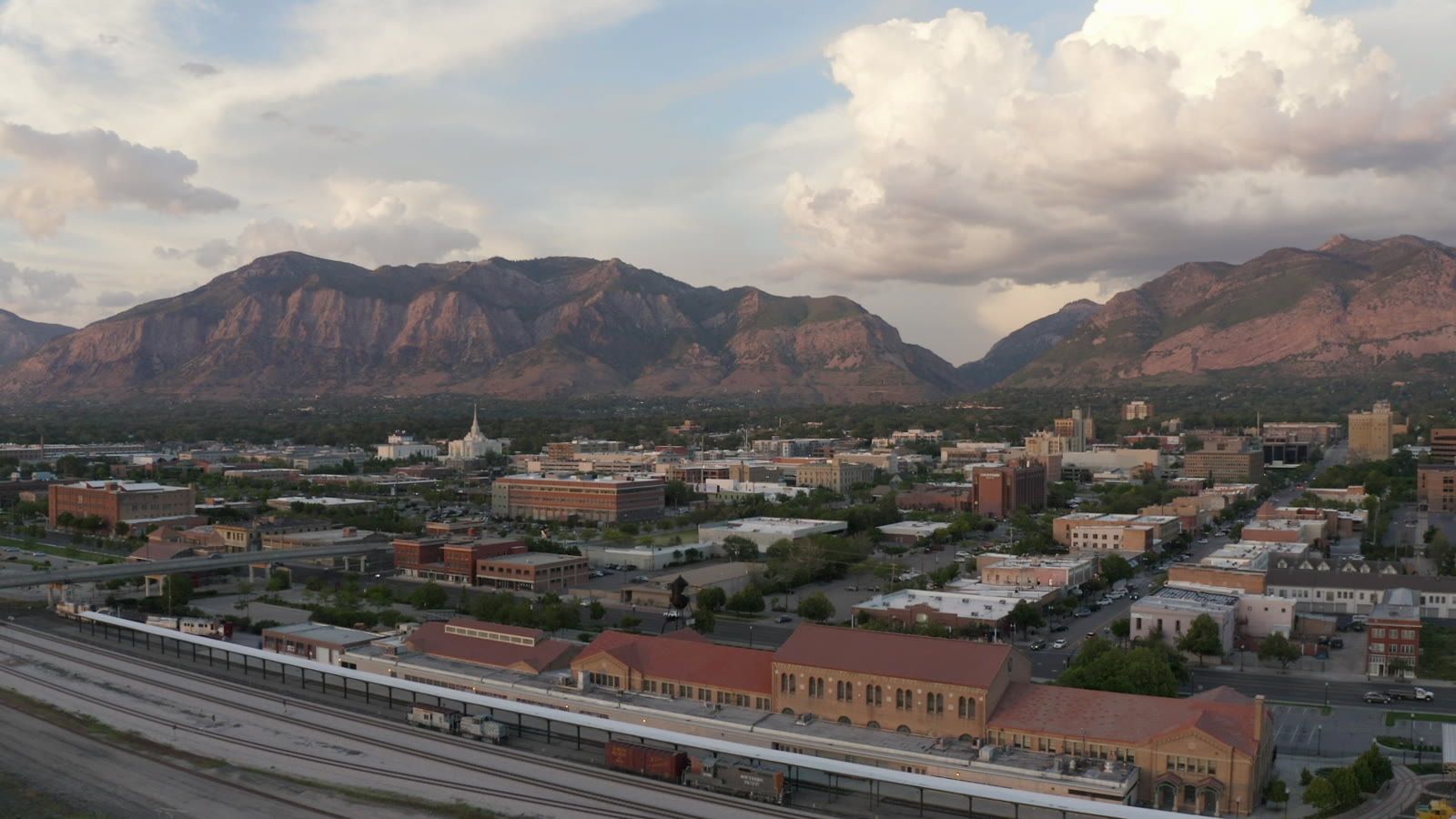
The average rent in Ogden, Utah is $1,216 a month, the cheapest of eight Northern Utah cities we tracked. Below: what that number really includes, what owning costs, and the monthly math.
Key Takeaways
- Ogden's median gross rent is $1,216, which is $322 to $553 a month below nearby cities.
- The median Ogden home value is $355,600, the lowest of the eight cities compared here.
- Ogden's typical 2025 tax rate is 1.2402%, but the 45% exemption keeps the median bill near $2,426.
- Median rent takes about 20% of Ogden's median household income of $72,575.
- Census rent figures include utilities and lag current listings, so check live rents before you budget.
See What's For Sale Right Now
Browse every active Northern Utah listing on a live map — updated straight from the MLS.
In this article
- What Is the Average Rent in Ogden, Utah?
- What Does "Gross Rent" Actually Include?
- How Does Ogden Rent Compare to Roy, Layton, and Davis County?
- Why Is Ogden Cheaper Than Its Neighbors?
- What Does It Cost to Buy a Home in Ogden?
- How Much Are Property Taxes on an Ogden Home?
- What Are the Real Monthly Housing Numbers in Ogden?
- Is There a Cost of Living Index for Ogden, Utah?
- Does Ogden Make Sense for Hill AFB Military Families?
- Who Is Ogden Right For, and Who Should Look Elsewhere?
- How Should You Budget Before Moving to Ogden?
What Is the Average Rent in Ogden, Utah?
Ogden's median gross rent is $1,216 a month, according to the U.S. Census Bureau's ACS 2024 5-Year Estimates. That's the lowest of eight major Weber and Davis County cities compared here.
According to the U.S. Census Bureau (ACS 2024 5-Year Estimates), the median gross rent in Ogden is $1,216 a month. Ogden has a population of 87,413, so that figure covers a lot of rentals, from old brick fourplexes near downtown to newer units on the west side.
"Median" means half of Ogden renters pay more and half pay less. It is not the same as an "average" asking price on a rental site. Medians are better for budgeting because a few luxury apartments can't drag them up.
The short version: Ogden is the most affordable place to rent among the larger cities between Ogden and Bountiful. Whether it's the right fit is a separate question, and we'll get to that.
What Does "Gross Rent" Actually Include?
Census gross rent is the contract rent plus estimated utilities the renter pays, like electricity, gas, and water. So $1,216 is closer to a total housing cost than a listing price.
This trips up a lot of people. The Census defines gross rent as contract rent plus the estimated monthly cost of utilities and fuels if the renter pays them. That means the $1,216 figure often already includes power, gas, and water.
Two more things to know:
- It's a five-year blend. ACS 5-Year Estimates pool surveys from 2020 through 2024. Rents signed years ago are mixed in with new leases.
- It covers every rental. That includes long-term tenants who haven't seen a big increase in years.
Put simply, current asking rents usually run higher than the Census median. Use $1,216 to compare cities fairly, then check live listings before you sign. Treat the Census number as a floor, not a quote.
How Does Ogden Rent Compare to Roy, Layton, and Davis County?
Ogden rent is $322 to $553 a month lower than seven nearby cities. Roy's median is $1,624, Layton's is $1,538, and Farmington's is $1,769, per Census ACS 2024 data.
Here's how Ogden's housing costs stack up against its neighbors, using the Census Bureau's ACS 2024 5-Year Estimates. The rent-to-income column is our math: annual median rent divided by median household income.
| City | Median gross rent | Median home value | Median household income | Rent as % of income |
|---|---|---|---|---|
| Ogden | $1,216 | $355,600 | $72,575 | 20.1% |
| Clearfield | $1,579 | $373,900 | $75,495 | 25.1% |
| Roy | $1,624 | $383,000 | $91,282 | 21.3% |
| North Ogden | $1,638 | $476,600 | $113,722 | 17.3% |
| Layton | $1,538 | $477,700 | $102,480 | 18.0% |
| Bountiful | $1,565 | $532,200 | $104,785 | 17.9% |
| Kaysville | $1,538 | $623,700 | $133,026 | 13.9% |
| Farmington | $1,769 | $650,700 | $127,338 | 16.7% |
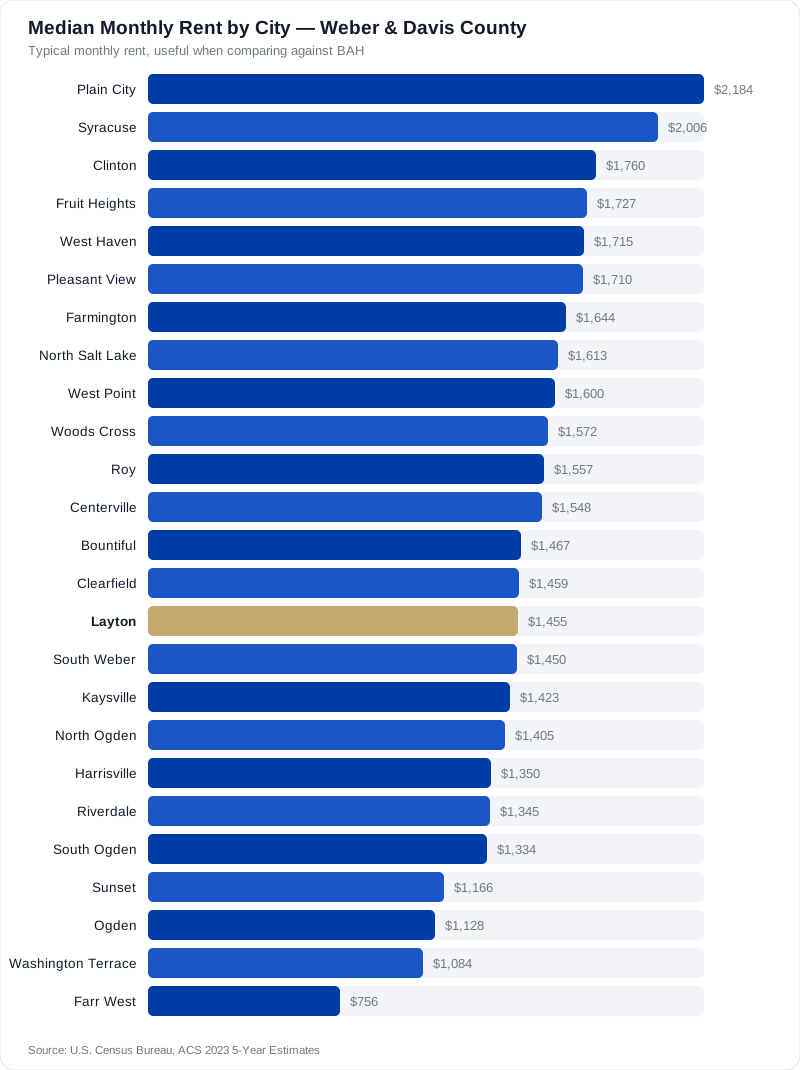
The gap adds up fast. Renting at Ogden's median instead of Roy's saves about $408 a month, or $4,896 a year. Compared with North Ogden, the gap is $422 a month.
Why Is Ogden Cheaper Than Its Neighbors?
Ogden has more older homes, more apartments, and more small multifamily buildings than the newer suburbs around it. Older, denser housing stock usually rents and sells for less.
Ogden is the old railroad hub of Northern Utah. Much of the housing near downtown and east of Washington Boulevard dates back generations, with plenty of duplexes, fourplexes, and converted older homes.
Cities like Layton, Kaysville, and Farmington grew mostly in later decades, with larger single-family homes on bigger lots. Newer homes and bigger floor plans cost more, whether you rent or buy.
Ogden also varies a lot block to block. The east bench, the Harrison Boulevard corridor, and newer west-side subdivisions don't price like central downtown. The citywide median hides a wide range, so a $1,216 budget will get you different things in different neighborhoods.
What Does It Cost to Buy a Home in Ogden?
The median Ogden home value is $355,600, per Census ACS 2024 data. That's about 4.9 times the city's median household income, similar to Clearfield and lower than Bountiful or Farmington.
The Census Bureau puts Ogden's median home value at $355,600 (ACS 2024 5-Year Estimates). That's the lowest of the eight cities in our comparison. Like rent, it's self-reported by owners and blended across five years, so current list prices tend to be higher.
A useful gut check is the price-to-income ratio. Ogden's is about 4.9 ($355,600 divided by $72,575). Roy and North Ogden sit near 4.2, while Bountiful and Farmington run above 5.0.
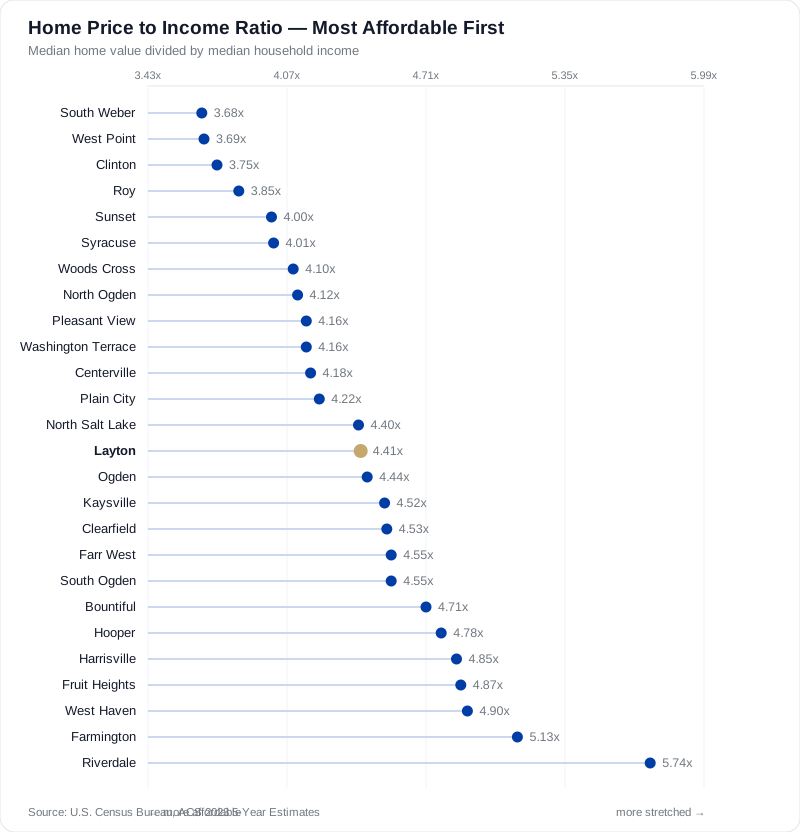
So Ogden has the lowest sticker price, but local incomes are lower too. If your paycheck comes from outside Ogden, like a Hill AFB salary or a remote job, Ogden's prices stretch your income further than the local ratio suggests.
How Much Are Property Taxes on an Ogden Home?
Ogden's typical 2025 tax rate is 1.2402%, applied to 55% of market value. On the $355,600 median home, that's about $2,426 a year, or roughly $202 a month.
According to the Utah State Tax Commission's 2025 Tax Rates by Tax Area, Ogden's most common rate for the 2025 tax year is 1.2402%. Rates vary by tax area inside the city, from 1.1256% to 1.2770%, so your exact rate depends on the address.
That rate looks high, but it doesn't apply to your full home value. The Utah State Tax Commission explains that Utah's primary residential exemption removes 45% of a primary home's market value from taxation, so only 55% is taxed. It covers the house and up to one acre.
On the Ogden median home: $355,600 × 55% = $195,580 taxable, times 1.2402% ≈ $2,426 a year. Roy's typical 2025 rate is 1.0307%, giving about $2,171 on its higher $383,000 median. Our separate property tax post goes deeper on how bills are set and appealed.
Free PCS to Utah Relocation Guide
Get my Hill AFB relocation packet — neighborhoods, VA loan tips, schools, and timelines — sent to your inbox.
What Are the Real Monthly Housing Numbers in Ogden?
A median Ogden renter pays about $1,216 a month including most utilities. A median-value owner pays roughly $202 a month in property tax, plus mortgage, insurance, and utilities on top.
Here's how the monthly picture breaks down using only verified numbers:
- Renting at the median: $1,216 a month gross rent, which usually includes utilities. That's about 20% of Ogden's median monthly household income of roughly $6,048.
- Owning at the median: about $202 a month in property tax on a $355,600 home, based on the 2025 tax year rate.
For owners, the biggest line is principal and interest, and that depends on your rate, down payment, and loan type. We won't guess a rate here. Plug today's quote into a mortgage calculator, then add property tax, homeowners insurance, and utilities.
A quick rule: if your full owner payment lands near the rent you'd pay for a similar home, buying usually wins over a multi-year stay. If it's far higher, renting first is often the smarter move.
Is There a Cost of Living Index for Ogden, Utah?
Several private websites publish a cost of living index for Ogden, but methods differ and none is an official government figure. For housing, the Census rent and home value data is more reliable.
If you search "cost of living index Ogden Utah," you'll find sites scoring the city against a national baseline of 100. Those scores mix housing, groceries, transportation, and healthcare using each site's own formula. They often disagree with each other.
We don't quote any one index here because there's no single official number. What we can say with confidence: housing is the biggest swing factor, and Ogden's housing costs are the lowest of the major Weber and Davis cities by Census measures.
Everyday costs like groceries and gas don't change much between Ogden and Layton. Your housing choice is where the average cost of living in Ogden, Utah really separates from its neighbors.
Does Ogden Make Sense for Hill AFB Military Families?
Often, yes. Ogden's lower rents and prices can leave room in a BAH budget, and the city sits close to Hill AFB's north side. Check your exact BAH rate against live listings first.
Ogden is a short drive from Hill Air Force Base, and many airmen and civilians live here. Because Ogden's median rent is well below Roy, Clearfield, and Layton, a fixed housing allowance can go further.
BAH rates change every year and depend on rank and dependents, so pull your exact number from the official DoD BAH calculator. Then compare it with what's actually available. Don't compare BAH to the Census median, since current rents run higher.
If you're buying with a VA loan, Ogden's lower prices can mean a smaller loan and payment. We cover VA loans in separate posts. For the full move checklist, see our PCS relocation guide for Hill AFB.
Who Is Ogden Right For, and Who Should Look Elsewhere?
Ogden fits budget-focused renters, first-time owners, and anyone wanting city amenities for less. It's less ideal if you want newer construction, large lots, or the lowest property tax rate.
Here's the honest version. Ogden is a strong fit if you:
- Want the lowest rent or purchase price in the area
- Like older homes with character and walkable downtown access
- Earn income from outside Ogden and want it to stretch further
- Want quick access to the mountains, trails, and ski resorts up Ogden Canyon
Ogden may not be right if you: want a newer home with a big yard and an attached three-car garage, since those are more common in West Haven or Layton. And if property tax rate matters most, Ogden's typical 2025 rate of 1.2402% is the highest in our list, though the dollar bill stays moderate because values are lower.
Older homes can also bring repair costs, like aging roofs, sewer lines, and furnaces. Budget for an inspection and a repair cushion before you count the savings.
How Should You Budget Before Moving to Ogden?
Start with the Census median as a baseline, check live listings for real asking prices, add utilities if they're not included, and add property tax and insurance if you're buying.
Follow these steps to get a real number:
- Set a baseline. Use $1,216 rent or $355,600 home value from the Census as a starting point.
- Check live listings. Browse current Ogden MLS listings to see what's actually available in your price range today.
- Confirm utilities. Ask landlords which utilities are included. Water, sewer, and garbage are sometimes bundled.
- Add owner costs. For buyers, add roughly $202 a month in property tax at the median, plus insurance and any HOA.
- Compare neighborhoods. Look at our Ogden community page and the Weber County hub to compare nearby cities.
Want everything in one place? Grab our free 208-page relocation guide, which covers neighborhoods, schools, and moving logistics across Weber and Davis County.
Thinking About a Move? Let's Talk.
Call Donald I. Gomez for straight answers on Northern Utah real estate — no pressure, just local help.
Frequently Asked Questions
What is the average rent in Ogden, Utah?
Is Ogden cheaper than Layton or Roy?
Why is Ogden's property tax rate higher than nearby cities?
How much income do I need to live comfortably in Ogden?
Does Ogden's median rent include utilities?
Is Ogden a good place for Hill AFB families to live?
Where can I find homes for sale or rent in Ogden right now?

Donald I. Gomez
Donald helps buyers, sellers, and PCSing military families move across Northern Utah — from Ogden to the Wasatch. A longtime Hill AFB-area local, he tours new builds and resale homes every week on his YouTube channel.